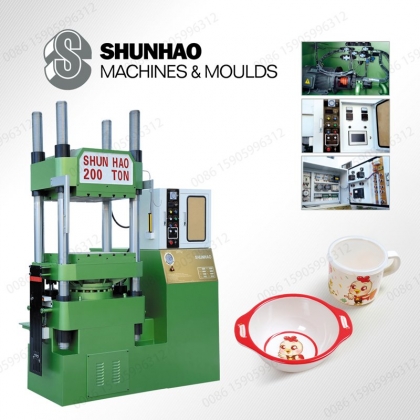
Melamine tableware is one of the most cost-effective, durable, and widely utilized catering and household tableware solutions globally. Characterized by drop resistance, scratch resistance, and low production costs, it has emerged as the mainstream choice for hotels, restaurants, schools, and daily family use. However, three recurring quality defects—cracks, surface bubbles, and batch discoloration—continue to pose challenges for melamine production factories.
Why Do These Existing Problems Exist and How Do They Matter?
Cracks
Most melamine tableware cracks form at edges or hidden internal areas, caused by uneven hydraulic pressure, improper demolding timing, and inconsistent mold temperatures. Cracked items break easily during shipping and use, resulting in total product loss and economic damage to manufacturers.
Bubbles
Bubbles are categorized into surface-floating and internally-closed types, which are triggered by moist raw materials, blocked mold vents, and inadequate exhaust during the pressing process. These bubbles not only compromise product appearance but also result in failures in food safety and surface smoothness inspections, ultimately leading to order returns.
Discoloration
Batch discoloration, yellowing, and color spots are mainly caused by uneven mold temperature, unreasonable pigment proportion, and over-curing. Inconsistent batch colors cannot meet unified catering and wholesale order standards, seriously affecting product marketability.
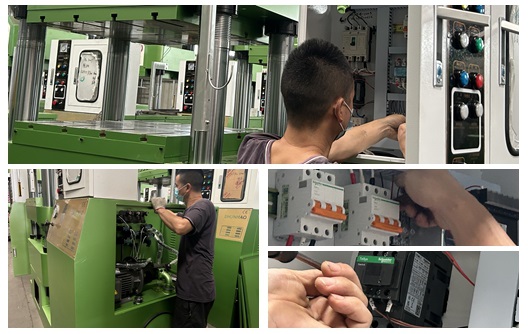
Drawing on over two decades of experience in melamine crockery making machine manufacturing and on-site production debugging, Shunhao Machines has compiled six practical methods to eliminate cracks, bubbles, and discoloration in melamine tableware.
1. Optimize Raw Material Ratio and Pre-Drying Process
Poor raw material pretreatment causes fine bubbles and batch discoloration. Small factories often skip proper drying and standardized mixing, leading to unstable quality. Control moisture, standardize mixing ratios, and unify pre-curing parameters to eliminate bubbles and batch discoloration caused by poor raw material pretreatment.
2. Calibrate Upper and Lower Mold Constant Temperature Parameters
Mold temperature imbalance causes thermal cracks and discoloration. Old manual equipment often has inconsistent upper/lower temperatures and unstable local heating. Need to set unified temperature ranges by tableware type and calibrate sensors daily. It prevents overheating yellowing and low-temperature cracks, ensuring uniform color and stable molding.
3. Adopt Segmented Pressure & Speed Molding Control
In melamine production, one-time rapid pressing can trap air, leading to bubbles and edge cracks. The standard method is segmented pressing: slow low-pressure exhaust by gradual pressure boost. This eliminates defects and suits mass production of tableware.
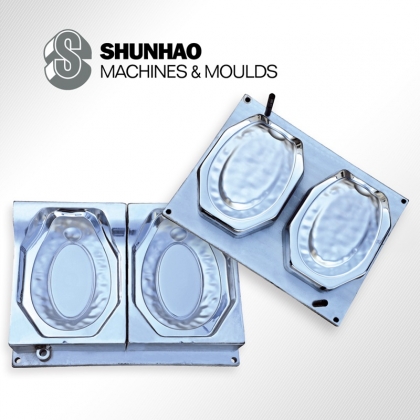
4. Implement Regular Mold Vent Cleaning & Precision Maintenance
Mold vent blockage and residue cause bubbles and color spots. Daily cleaning, weekly vent dredging, and regular anti-rust maintenance keep molds in optimal condition.
5. Standardize Demolding & Post-Cooling Cycle
Improper demolding and cooling are often the main causes of post-molding defects. Early demolding damages edges and creates micro-cracks; delayed demolding causes yellowing and deformation. Set unified demolding times based on product thickness and mold temperature. After demolding, use graded natural cooling to prevent surface cracks and color distortion—especially important with seasonal temperature and humidity changes.
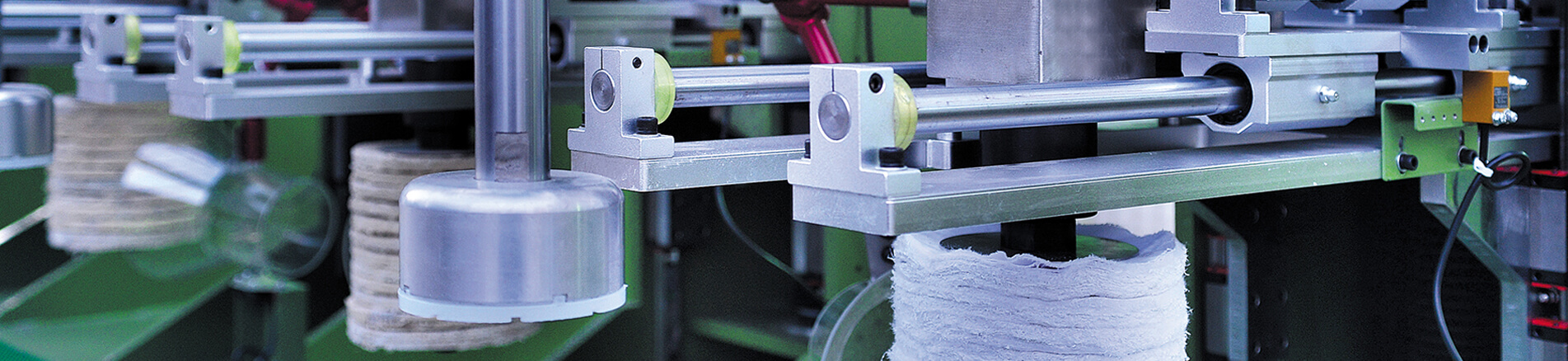
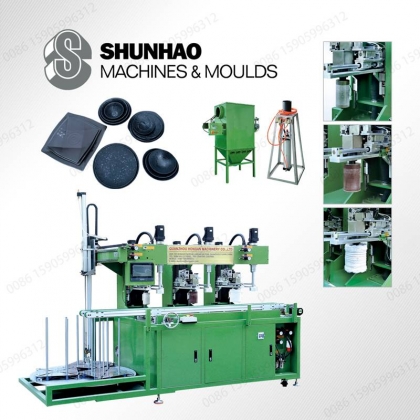
6. Upgrade High-Precision Automatic Molding Equipment
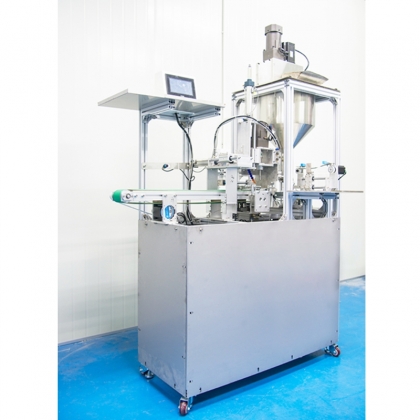
Most legacy factories with high defect rates use outdated manual molding equipment, causing operational errors and unstable control. Upgrading to intelligent automatic melamine molding machines solves this by enabling fully automated parameter control, consistent batch standards, and significantly lower long-term costs and defect rates.
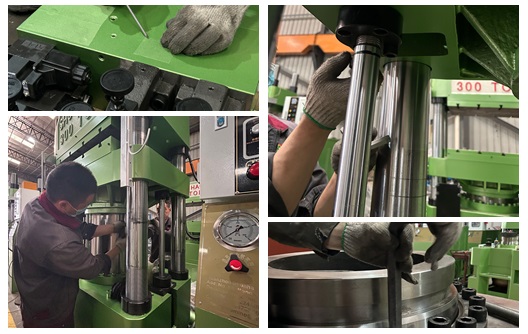
Real Factory Optimization Case:
Shunhao’s technical team assisted the factory in fully implementing the 6 optimization methods above. After 30 days of systematic optimization, the factory’s overall defect rate dropped sharply to 1.8%. Cracks and bubble defects were basically eliminated, batch color difference was completely solved, raw material waste was reduced by 13%, and the product qualification rate stabilized at 98.2%. The factory’s order delivery efficiency and customer repurchase rate were significantly improved.
The 6 optimization methods summarized in this article have been fully verified by actual factory mass production, helping melamine tableware manufacturers reduce costs and improve efficiency, and helping procurement managers and distributors avoid quality risks.
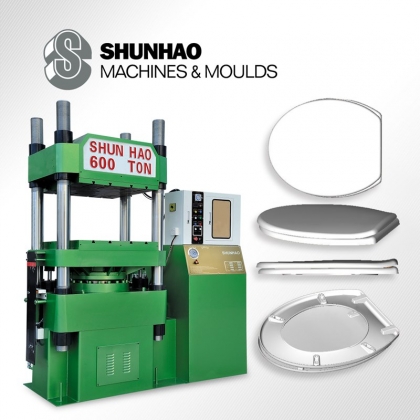
As a professional melamine crockery press machine manufacturer with 20+ years of industry experience, Shunhao provide global customers with high-quality melamine molding compound plant machine, parameter debugging guidance, and one-stop production quality optimization solutions to help enterprises achieve stable and high-quality mass production.
FAQ
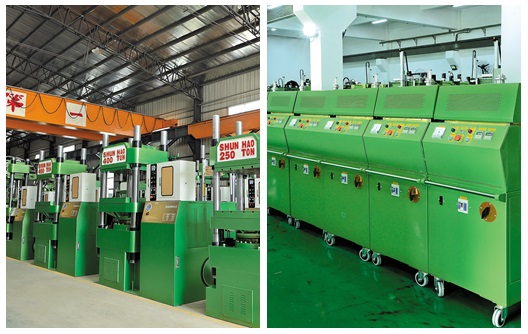
Q1: What system of Shunhao molding machines?
A1: Taiwan technology designed system for circuit and oil valves system.
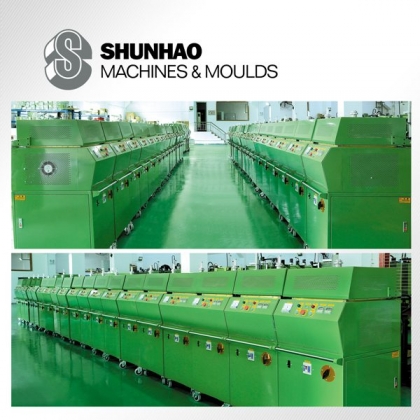
Q2: Machine colors only Green available?
A2: No, Shunhao machines can use other colors printing for your machines.
Q3: Is equipment upgrade necessary to reduce melamine defect rates?
A3: Old manual equipment has large parameter errors and poor stability, leading to fluctuating defect rates. For long-term large-scale production, high-precision automatic molding equipment can fundamentally stabilize production parameters, reduce labor costs and defect rates, with obvious long-term economic benefits.
Q4: How to control seasonal melamine tableware defects?
A4: High temperature and humidity in summer easily cause bubbles and discoloration due to damp raw materials; low temperature in winter easily leads to thermal cracks. Factories need to adjust raw material drying time and mold temperature parameters according to seasonal environmental changes to stabilize quality.
Address : No.173, Jitai Rd., Qingmeng Ind Zone, Quanzhou City, Fujian, China
Tel : +86-595-22216883
Whatsapp : +86 15905996312
Email : machine@hongancn.com